
Netflix alters sets and lighting post-filming using AI
Eyeline Studios, owned by the streaming giant, employs generative technologies to rework locations, crowds, and lighting without reshoots
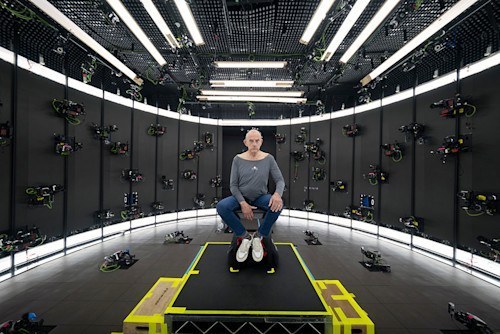
Eyeline Studios, a Netflix subsidiary, is integrating generative AI into post-production to replace locations, recreate crowds, and adjust lighting after filming has concluded. This was revealed at the View Conference in Turin by the studio's Vice President of Innovation, Mohsen Mousavi, who worked on the final season of *Game of Thrones*.
According to Mousavi, generative models can handle approximately 60–70% of the work, but refining the results to a professional standard remains the primary challenge. The studio employs a 'hybrid production' approach, combining live-action filming, traditional visual effects, and AI tools. For instance, actors perform on partially constructed sets under flat lighting, with the environment and lighting enhanced later.
One of Eyeline's developments allows for changing camera angles and lighting post-filming. In demonstrations, the studio showed how a location could be transformed into another without using a green screen. 'This provides freedom for lighting and camera work after capturing the actors' performances,' Mousavi noted, emphasizing the preservation of the actors' identities.

These technologies have already been applied in Netflix projects. For the drama *Brazil 70: The Third Star*, about the national team's victory in the 1970 World Cup, Eyeline recreated emotionally responsive crowds in stadiums by combining filmed elements, sprites, traditional computer graphics, and generative methods. Mousavi acknowledged that achieving such results through traditional means would have been extremely difficult within the budget.
In the documentary series *The American Experiment*, the studio used background extension, generative dust, and other digital elements integrated with real footage. Techniques for altering actors' ages and experiments with post-filming camera and lighting adjustments were also demonstrated.
Among the technologies under development are controllable generative fluids. Currently, such simulations are unreliable and difficult to control, but Eyeline aims to give artists the ability to adjust water speed, viscosity, and turbulence using keyframes. 'Often in visual effects, you need to break the physics of fluids to achieve the desired creative effect,' Mousavi explained.
The studio relies on its own developments rather than off-the-shelf generators. 'Most of the work is based on our research and models,' he emphasized. Netflix is also expanding its AI efforts: in July, the company reported that around 300 projects had already utilized generative technologies.