
378 Days on 'Mars': NASA Completes Isolation Experiment
On October 31, four participants of NASA's CHAPEA Mission 2 emerged from Mars Dune Alpha after spending 378 days in a sealed module. The Martian flight was a ground-based simulation, so the crew remained under Earth's gravity and atmospheric protection.
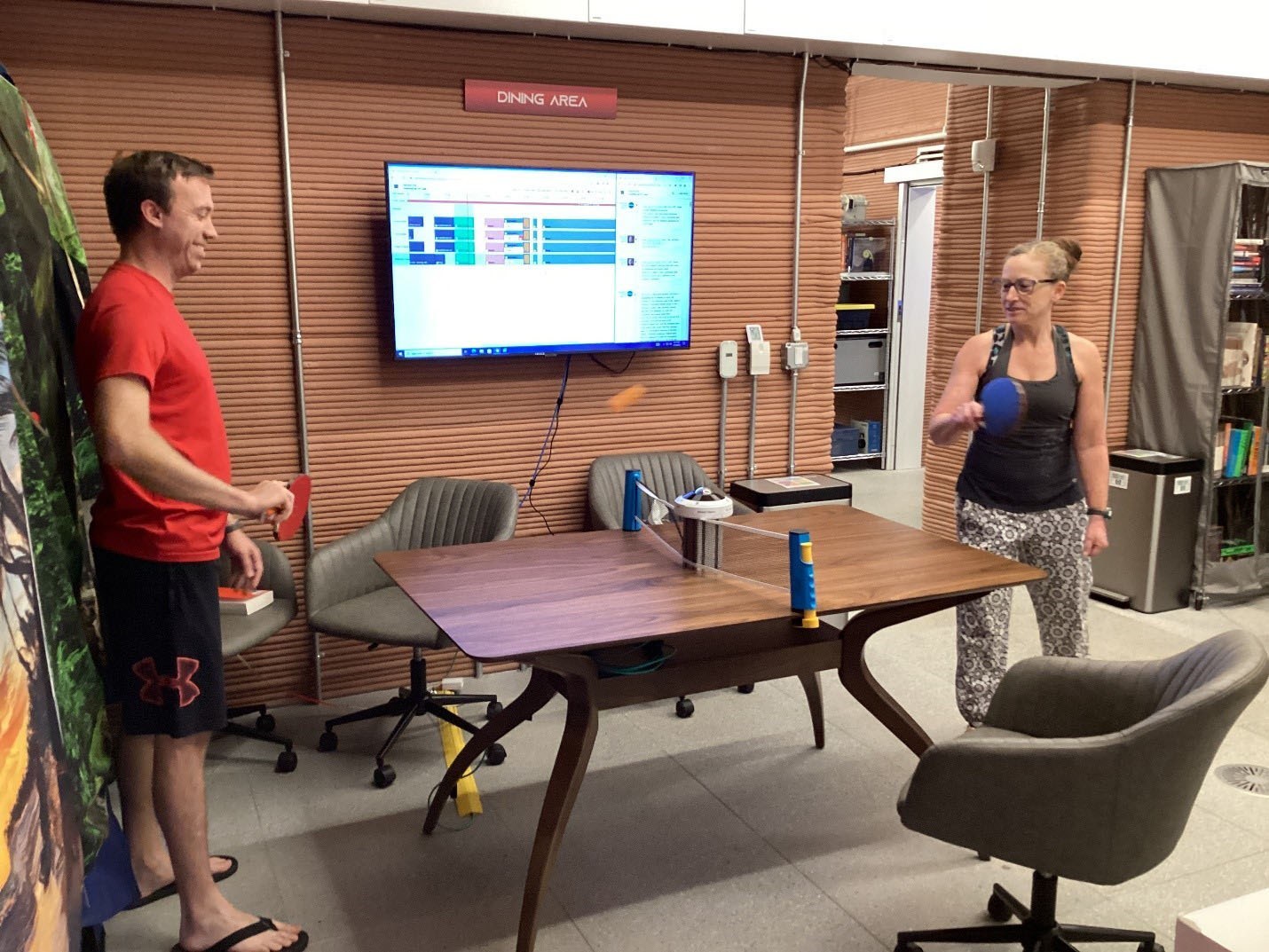
On October 31, NASA's second CHAPEA mission concluded—an experiment replicating certain living conditions for future Mars explorers. Four participants exited the Mars Dune Alpha module after 378 days of isolation.
The experiment began on October 19, 2025, at the Johnson Space Center in Houston. Throughout this period, Ross Elder, Ellen Ellis, Matthew Montgomery, and James Spicer lived and worked in a 3D-printed module covering approximately 158 square meters. Inside, there were private rooms, a kitchen, a medical area, workstations, exercise equipment, and facilities for growing plants.
The crew's daily routine mirrored that of a real expedition. Participants maintained equipment, operated robots, engaged in physical exercises, and cultivated crops, including tomatoes and peppers. They also conducted simulated Martian surface excursions.

One of the primary challenges was communication with the external team. Messages were transmitted with an artificial delay of up to 22 minutes one way, meaning responses could take around 44 minutes. This forced participants to make more decisions independently.
In May, conditions were further complicated: for nearly two weeks, the crew had no contact with mission control. They had to continue operations using pre-prepared procedures, resolving emerging issues with the resources available inside the base.
NASA is studying how prolonged isolation, limited supplies, and technical malfunctions affect the health, psychological state, and performance of a small team. The collected data will help plan future expeditions, design habitation modules, and determine what support humans will need far from Earth.
However, CHAPEA primarily replicates everyday and organizational difficulties. Participants remained under Earth's gravity and atmospheric protection—the experiment did not simulate Mars' reduced gravity or exposure to cosmic radiation.
The first CHAPEA mission concluded in July 2024 and also lasted 378 days. NASA plans to launch the next phase of ground-based research no earlier than August 2027. The new experiment will combine elements of the HERA and CHAPEA programs: one module will simulate a spacecraft, while another will replicate a base on the surface of the Moon or Mars.