

Scientists create system for transmitting scents over the internet
Scentronic identifies a scent and triggers its reproduction on a remote device
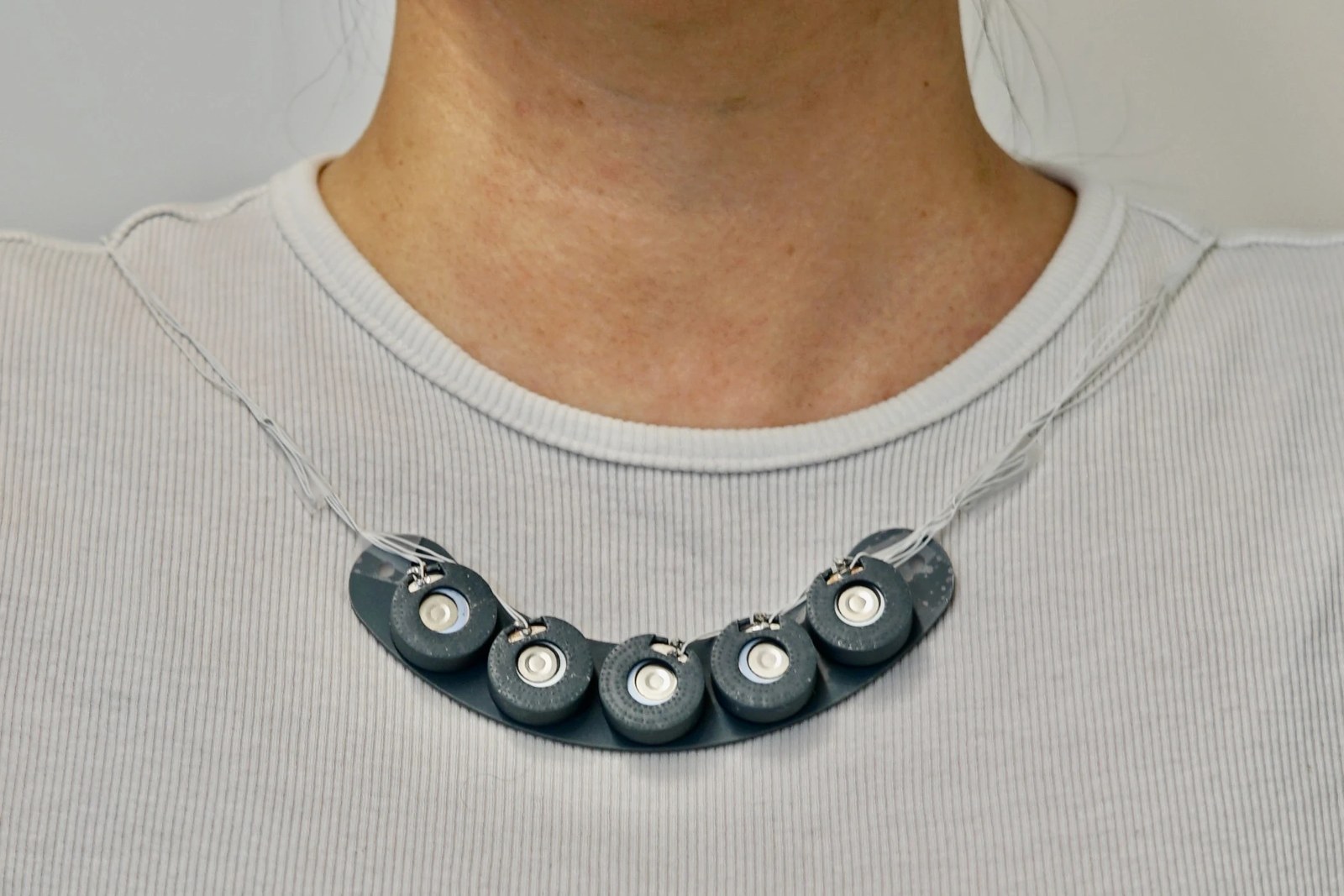
Researchers from The Ohio State University and China's Zhejiang Laboratory have developed an experimental system called Scentronic. It combines an electronic 'nose,' machine learning, and a scent generator, enabling the recognition of a smell in one location and its reproduction in another.
The transmitting part uses six gas sensors. When they come into contact with volatile substances, their electrical characteristics change. The resulting set of signals is analyzed by a machine learning algorithm that determines the scent category.
For training, the researchers collected 250 recordings—50 for each of five categories, including coffee, beer, orange, and red wine.

After recognition, the command is transmitted over the network to a receiving device. This device contains reservoirs with pre-prepared aromatic liquids. Piezoelectric sprayers create a fine aerosol near the user's nose. The duration and mode of delivery allow for adjusting intensity, while multiple channels enable scent mixing.
Thus, data and control commands are transmitted over the internet. The scent itself is generated on-site from available consumables.
The developers created several versions of the device: a two-channel bracelet, a five-channel necklace, and a handheld module with five channels.
In trials, 14 volunteers participated. They correctly identified individual scents in 72.86% of cases and two-component mixtures in 71.43%. In another test, participants distinguished five levels of alcohol scent intensity with 58.57% accuracy.
These figures reflect human responses in scent recognition, not the universal accuracy of the entire system.
The researchers also demonstrated an experimental cup in which dispensers added components to water, combining scent transmission with taste sensations.
For now, Scentronic remains a laboratory prototype. To expand the range of scents, it will be necessary not only to train the recognition system but also to select corresponding compositions for the scent generator. Therefore, the development is still far from achieving universal scent transmission comparable to sending sound or images.