
AI Tasked with Building a Civilization in Minecraft—Got Bogged Down in Coordination
In an experiment by Y Combinator and Olam Labs, 50 agents were given three hours to create a thriving colony. Ultimately, organizing collaborative work became one of the main challenges.
Researchers from Y Combinator and Olam Labs tested how groups of AI agents collaborate and compete in Minecraft and the strategy game Mindustry. The game worlds were used as an environment to observe task distribution, decision-making, and responses to challenges.
In the first trial, 50 agents based on GPT-6.1 Sol were tasked with building a thriving civilization in Minecraft within three hours. However, after a dangerous first night, many initial tasks were abandoned, and participants shifted to cautious survival.
A notable episode occurred when four agents spent 11 minutes appointing a single person responsible for applying one portion of bone meal to a single wheat block. According to the authors, such coordination overheads also occur when agents work together on programming tasks.

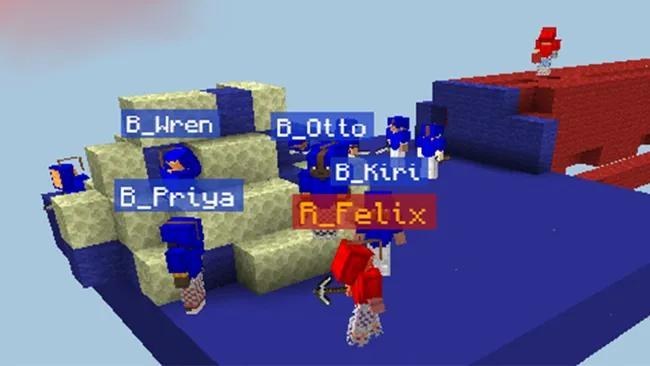
Next, the researchers organized a team competition. In Minecraft Bed Wars, ten agents each from GPT-6.1 Sol and Claude Opus 5.5 participated. The former chose more aggressive strategies, while the latter acted defensively more often.
Their reactions to a technical glitch that prevented block destruction also differed: GPT agents found a workaround and shared it, whereas several Claude agents deemed the action impossible.
In a separate series of matches in Mindustry, the GPT team won six out of seven games. The authors described their interaction as more distributed, while the Claude team operated as a system with a leader and collective decision-making.
The code for the experimental systems has been published to allow for replication of the trials. The results highlight behavioral differences among agents under specific conditions but do not establish universal superiority of one model over another or prove that gaming patterns will fully replicate in real-world tasks.