
Model Shows Earth Could Have Maintained a Temperate Climate Without Life
According to astrobiologists' calculations, a planet with Earth's parameters could have maintained a surface temperature suitable for life over 4.5 billion years due to geological processes. The atmosphere of such a planet would contain far less oxygen.
A team led by Samantha Gilbert-Yanizek from the University of Washington combined processes in the core, mantle, crust, oceans, and atmosphere into a single model. The researchers tracked the planet's development from an age of 50 million to 5 billion years. The model's parameters were adjusted based on data from pre-industrial Earth, using 19 indicators, including surface temperature, ocean mass, and heat flow from the mantle.
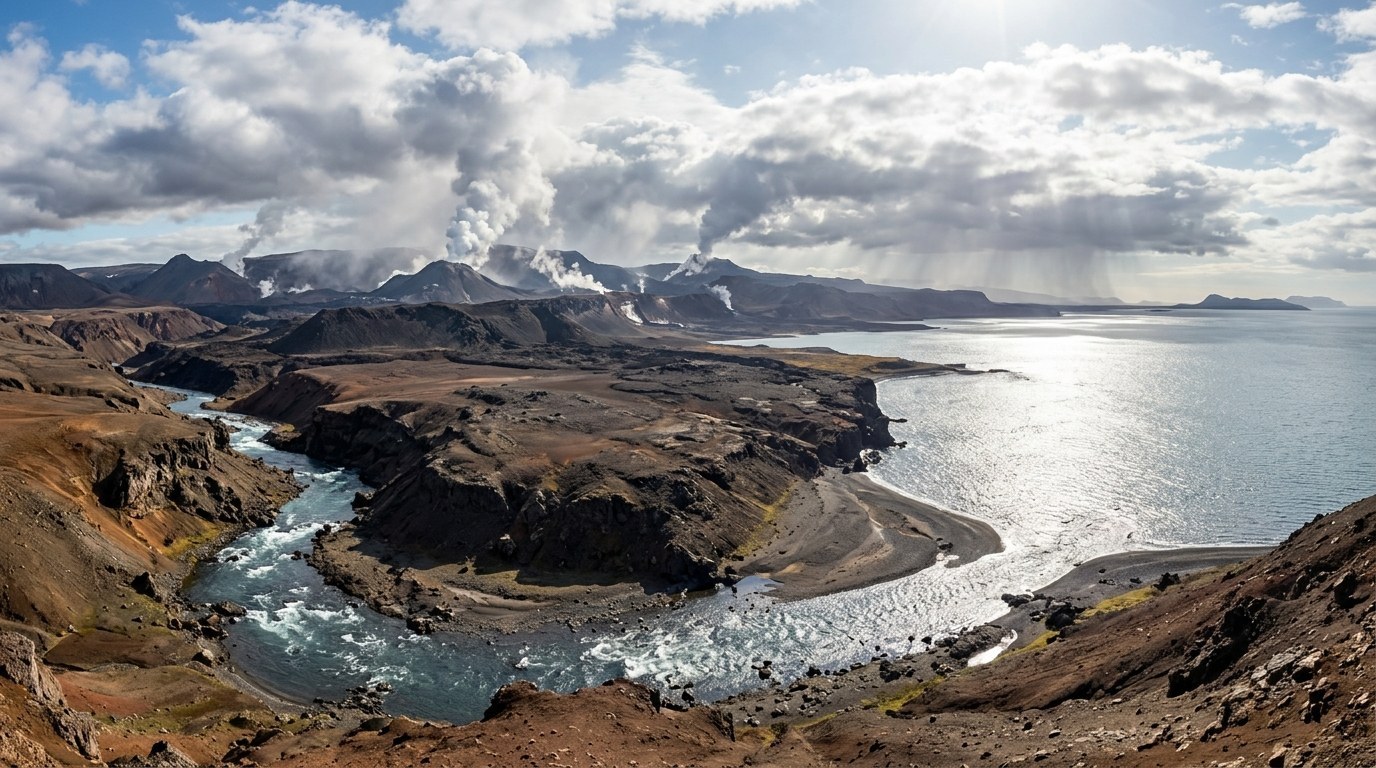
The primary mechanism for climate stabilization in the model was the carbonate-silicate cycle. Volcanoes emit carbon dioxide, while rock weathering and oceanic processes help sequester it. In the calculations, this cycle maintained the surface temperature within a habitable range, even though the Sun's luminosity increased by approximately 30% over 4.5 billion years.
The study refines one of the questions in the Gaia hypothesis—whether living organisms are necessary for long-term climate stabilization. In this model, geological processes managed the task. The contribution of the real biosphere to Earth's climate stability remains a separate question.